

Imagine building a working 3D bioprinter — capable of printing material that could one day help repair cartilage — using nothing more than LEGO Mindstorms. That’s exactly what a team of engineering students at The Catholic University of America did for their senior design project.
Watch the full interview below:
The project brought together the perfect team of four students:
Allison – Computer Science major
Eric – Computer Science major
Chase – Biomedical Engineering (4th year)
Paul – Mechanical Engineering
Eric supported the whole group, Allison handled the coding and system logic, Chase focused on the biomaterials and bio-ink development, and Paul created the CAD models and mechanical design.
The Personal Story That Sparked the Project
For Allison, the project had deep personal meaning. His mother suffers from knee problems and receives regular gel injections to delay a full knee replacement. When she read the project description about demonstrating the feasibility of artificial replacement cartilage, she knew he wanted to be part of something that could eventually help people like her moder — and patients in resource-limited countries.
Why LEGO? A Low-Cost, High-Impact Solution
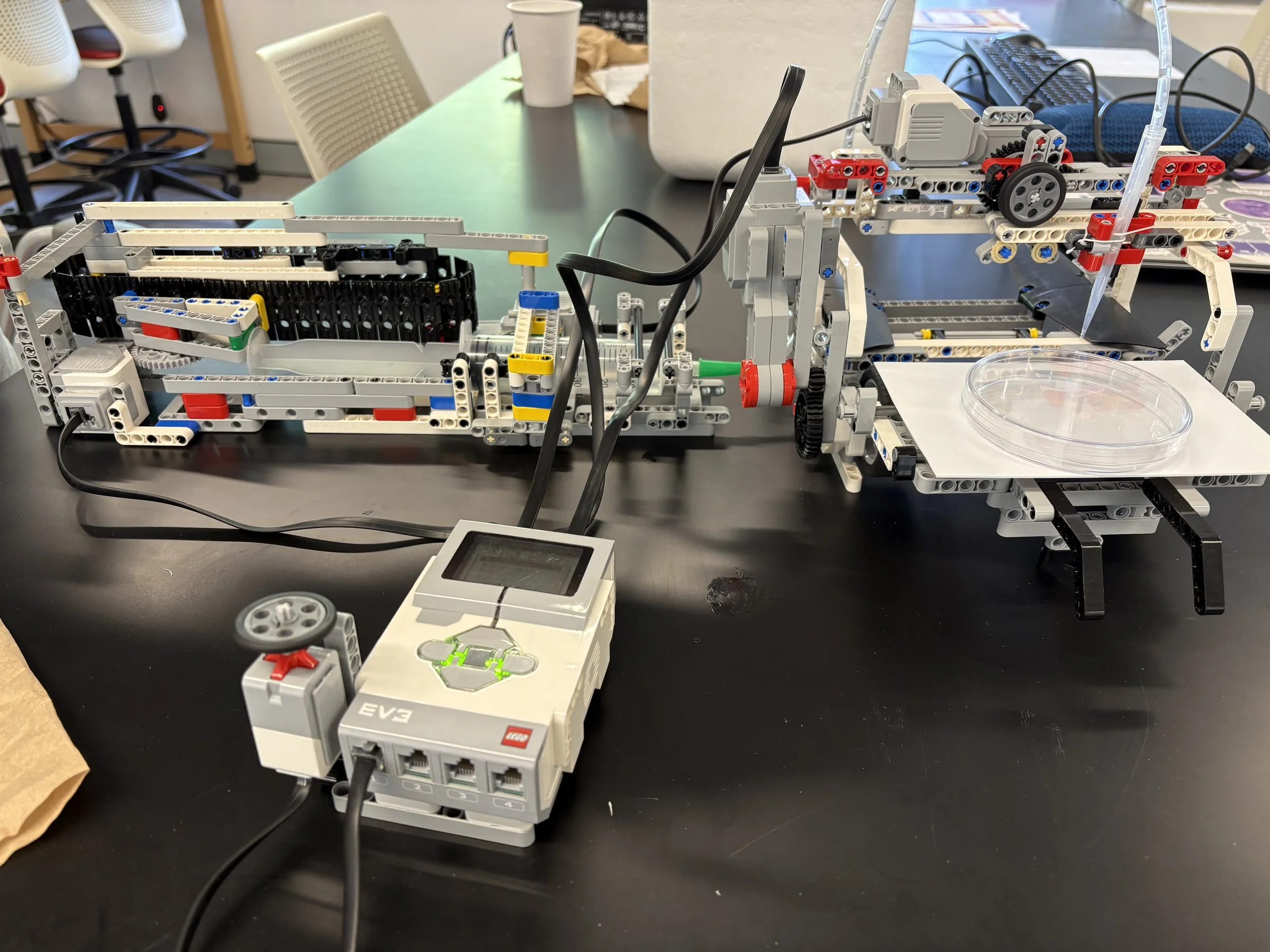
Traditional bioprinters can cost thousands of dollars. Dr. Wilson, the project advisor, was inspired by an earlier project that used LEGO Mindstorms for artificial skin grafts — and by his own wife’s knee replacement experience.
A single LEGO Mindstorms kit costs around $200, making the technology dramatically more accessible. The modular nature of LEGO also means the printer is easy to repair, modify, and even disassemble for transport — a huge advantage for potential use in developing countries or remote locations.
How They Built It From Scratch
The team started with zero existing instructions or stakeholders. They:
Researched extensively and watched countless YouTube tutorials
Designed and iterated through multiple prototypes
Built a custom syringe pump system
Created their own “Clayper” bio-ink using clay, cellulose, and Elmer’s glue for the initial feasibility demonstration
The printer uses two motors: one to move the print bed and one to move the print head — similar to a home inkjet printer. The team printed onto a thin, sturdy plaster-like material they sourced from a hobby closet.
From Demo Ink to Living Cell Grafts
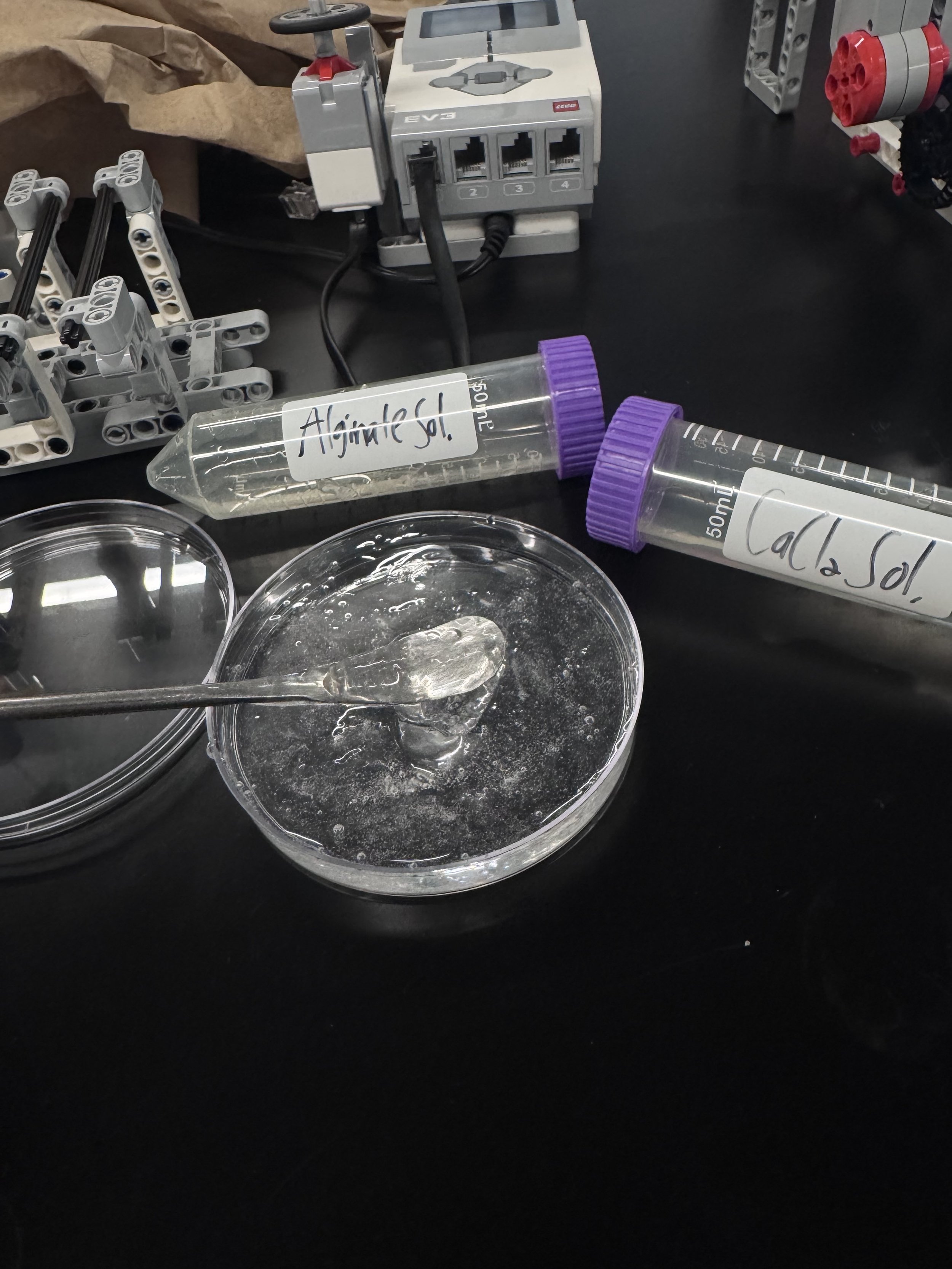
The initial “Clayper” material was designed to dry into foldable sheets (like origami) to prove the concept.
The team has already moved beyond the demo stage. Working with Dr. Raub (Chair of the Department of Biomedical Engineering), they are now testing a real biocompatible bio-ink made from alginate and calcium chloride. When the alginate hits the calcium chloride, it gels instantly — creating a structure that can support living cells. This opens the door to printing actual tissue grafts that could one day be used inside the human body.
The entire sterile setup (syringes, tubing, and pipette tips) remains very low-cost, keeping the spirit of accessible innovation alive.
Challenges, Teamwork & Lessons Learned
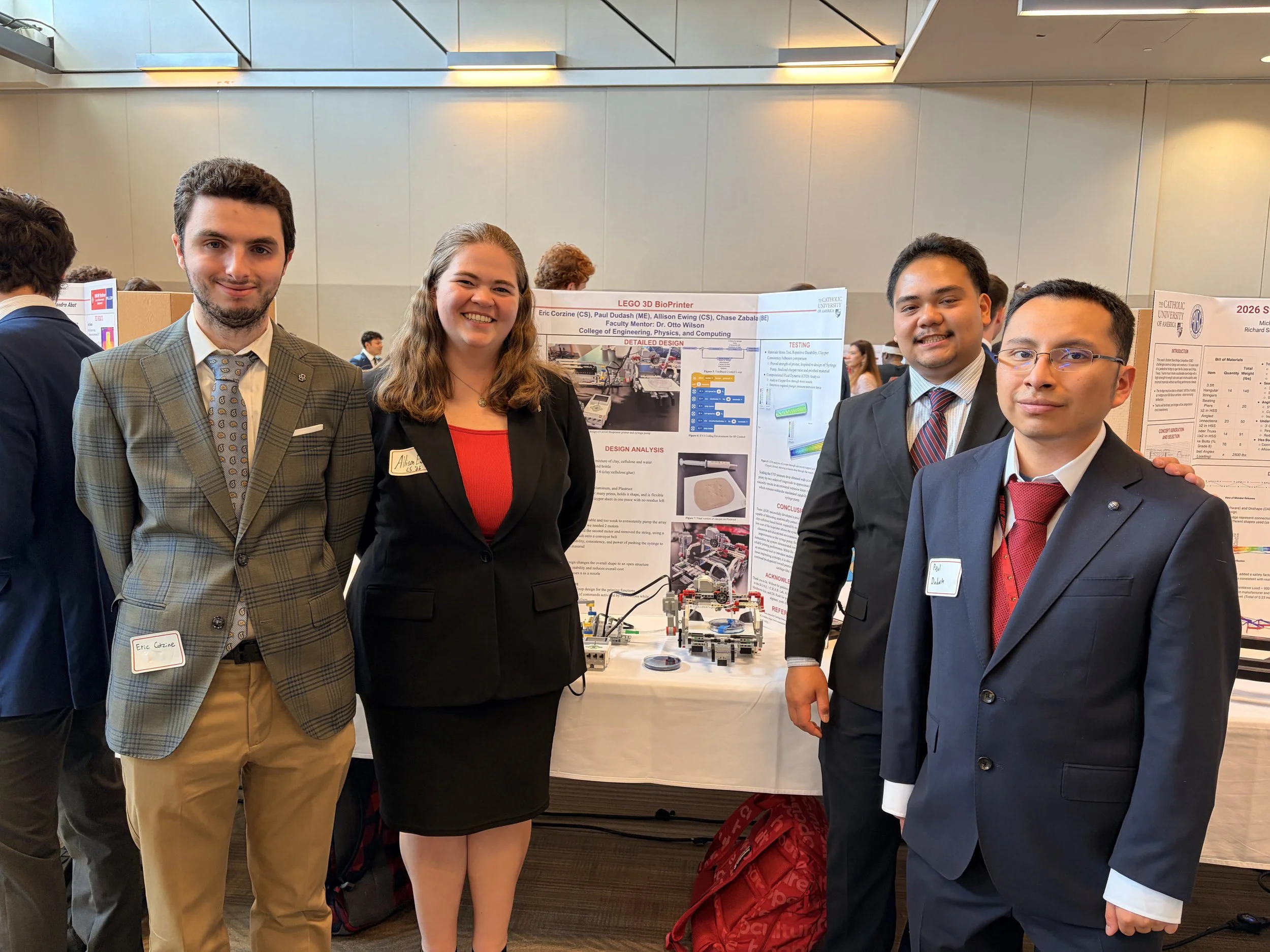
Building something completely new came with challenges. The team went through many prototypes and had to reverse-engineer parts from limited photos LEGO arrangements that could work for them. They emphasized that the key to success was strong communication, patience, and a good sense of humor — plus the realization that “at the end of the day, we’re playing with LEGOs.”
The mix of engineering expertises proved essential: computer science students managed the programming, the biomedical engineer handled the material, and the mechanical engineer put together the model for the physical design.
What’s Next?
The team wants to keep the printer together and pass it on to future students — ideally a group that will take this project further. Probably refine the biocompatible ink and turn this proof-of-concept into something with real medical potential?
This team has the satisfaction to see the bioprinter working. As one of the members puts it: they started with a professor’s idea and now they have a tangible printer printing potential viable bio-ink.
Why This Project Matters
This LEGO bioprinter is more than a clever student project. It shows how creative engineering, interdisciplinary teamwork, and a focus on accessibility can make advanced technology available to more people. Whether for medical research, education, or future applications in space or developing regions, projects like this prove that innovation doesn’t always require expensive equipment — sometimes it just takes smart students and a box of LEGOs.
Would you like to help more students and adults build amazing things like this?
We want students and adults from any community to understand the potential of ideas like this one. Our programs as designed to do just that. Help us achieve this goal by Donate or Volunteering.